The Scientific Advisory Board (SAB) is an OPCW subsidiary body that enables the Director-General to render specialised advice in science and technology to the Conference, Executive Council, or States Parties to the Convention.
The SAB reports to the Director-General, who submits its reports, alongside his own response, to the Executive Council. Every five years, the SAB prepares a larger report on developments in science and technology for submission to Review Conferences of the Chemical Weapons Convention.
The role of the SAB is to assess and report to the Director-General developments in scientific and technological fields that are relevant to the Convention. On request, the SAB provides advice on technical matters related to the implementation of the Convention, including on co-operation and assistance to the Technical Secretariat.
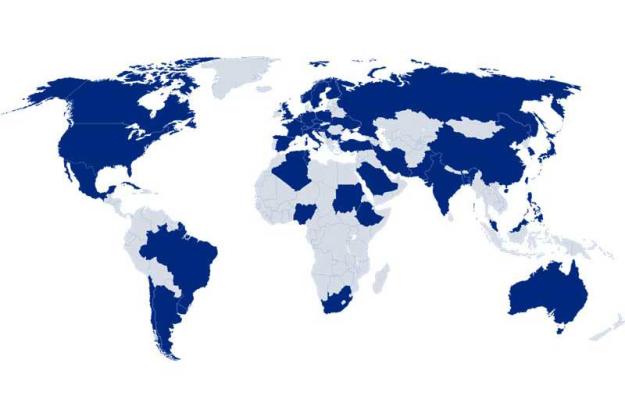
Map of the world showing SAB membership from 1998 to 2025 in dark blue
A Group of Independent Experts
The SAB is made up of 25 independent experts from OPCW Member States. The members serve in a personal capacity (not as representatives of their respective governments) for up to two consecutive three-year terms. The SAB chair and vice-chair are elected annually.
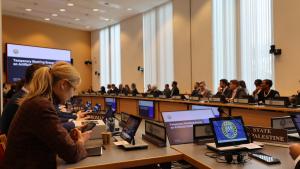
The SAB can also establish and coordinate temporary working groups to draw upon extended expertise for assessment and reporting on specific issues of relevance to the Convention.
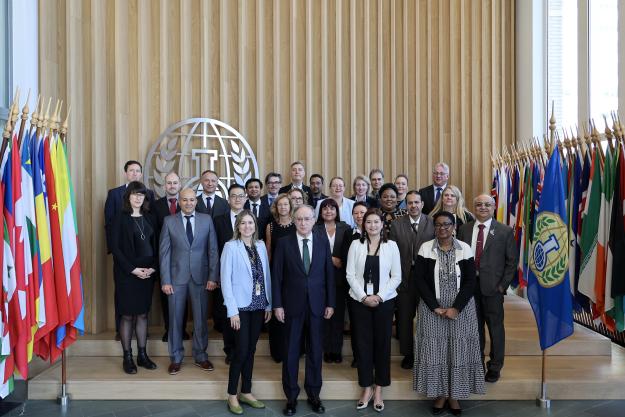
Members of the OPCW Scientific Advisory Board 2025
Members
(as of January 2026)
- Chairperson: Dr Matteo Guidotti
- Vice-chairperson: Professor Elisa S. Orth
Dr Crister Åstot (of Sweden) is currently a research director at the Swedish Defence Research Agency (FOI), Dept of CBRN Defence and Security, Umeå, Sweden. He is an expert in chemical analysis of CWAs and is the current manager of the OPCW Designated Laboratory at FOI. His research includes development of methods for chemical attribution profiling (forensic analysis) and analysis of chlorine biomarkers in biomedical samples. He has authored and co-authored many peer-reviewed publications and has a position as an assistant professor at the University of Linköping, Sweden.
Dr Tareq ALAhmadi (of Saudi Arabia) is currently a faculty member of the Department of Criminal Evidence at the King Fahd Security College. His areas of expertise include forensic science such as toxin analysis, sampling, detection, and identification, and his current research interests include drugs of abuse, pesticides, and toxic gases. He has taken part in many forensic science-related cases over his twenty-eight years of experience. Dr. ALAhmadi provides lectures for raising awareness regarding toxicology and supports various training, projects, and exercises. He has authored and co-authored numerous peer-reviewed publications, as well as numerous articles and book chapters, and has supervised many graduate and undergraduate students. Over his career he has functioned as a consultant to Civil Defense and the National Committee for Combating Drugs on matters involving gas toxic and fires and drugs of abuse and maintains collaborations with many sectors of the Ministry of Interior.
Professor Allisson Astuya Villalón (of Chile) is an Associate Professor in the Department of Oceanography at the Faculty of Natural and Oceanographic Sciences at the University of Concepción, and a researcher at the COPAS COASTAL Oceanographic Research Center. Dr Astuya also serves as the Director of the Biotoxin Laboratory at the University of Concepción (LBTx-UdeC), the first laboratory accredited under the ISO17025 standard for toxin detection in the Biobío region of Chile. Her research explores the function, molecular and pharmacological targets, mechanisms of action, and the design of detection tools for marine toxins and ichthyotoxins, as well as potential biomedical and veterinary applications, such as the development of an anesthetic based on microalgae from harmful algal blooms for use in aquaculture to improve animal management. Since 2014, she has been an Expert for the “Marine Toxins” Study Group of the Chilean Association for Food Safety (ACHIPIA). She has published numerous papers in specialized journals and holds 5 granted patents. Dr. Astuya holds a degree in Biochemistry and a Ph.D. in Biological Sciences, specializing in Cellular and Molecular Biology.
Professor Karim Ben Ali (of Tunisia) is a Full Professor of Chemistry at the Aeronautical Specialties School of the Tunisian Air Force. His expertise is focused on countering complex threats, spanning CBRNe risk reduction, operational deployment of mobile chemical laboratories, and the development of field-deployable solutions for chemical detection, identification, and decontamination. A key aspect of his work involves the monitoring and assessment of new and emerging technologies to anticipate future threat landscapes. He also leads the “Ballistics and CBRNe” Research Group at the Tunisian Military Research Center, while serving as a senior CBRNe expert adviser to the Tunisian Military. In parallel, he contributes to Nuclear Security studies at the National Center for Nuclear Sciences and Technologies. Professor Ben Ali is also actively involved in several national and international efforts, including the NATO Science for Peace and Security Programme, the National Leadership Committee on CBRN Risk Reduction, the Ministry of National Defence committee responsible for the implementation of the CWC, the National Expert Team on WMD proliferation financing risk assessment, and the UNICRI Board of Advisors of the 1540 Compass e-journal. He holds a PhD in Organic Chemistry from the University of Paris XI, France.
Dr Cindi Corbett (of Canada) is the Director of the Health Security and Response Division at the Public Health Agency of Canada’s National Microbiology Laboratory (NML). The Health Security and Response Division is Canada’s foci for high-consequence infectious disease laboratory response. The division focuses on esoteric diagnostic testing for rare microorganisms, high-consequence pathogen detection, surveillance, cutting edge pre-clinical MCM research and leadership within national and international laboratory networks. Cindi is one of Canada’s experts on security sensitive biological agents, providing guidance to the Royal Canadian Mounted Police led Chemical, Biological, Radiological, Nuclear and Explosives (CBRNE) National Response Team for biological security responses. Furthermore, Dr. Corbett’s research focuses on the advancement of capabilities for biological agent detection, identification and characterization, including novel detection assays for biological toxins. Over the past decade, Dr. Corbett has established and continues to foster the ongoing advancement of microbial forensic laboratory capabilities, ensuring that microbiological investigations meet standards required to withstand legal scrutiny, and that Canada remains vigilant in its preparedness against potential biothreats.
Dr Charlotte Desoubries (of France) is technical manager and the Head of the Sample Treatment team of the Analytical Chemistry Department, the French OPCW designated laboratory of DGA CBRN Defense, the French military center for CBRN concern. She holds an analytical chemistry PhD degree from the University of Pierre and Marie Curie in Paris, France. Her areas of expertise include sample preparation and analysis of CWA, toxin and related compounds in environmental and biomedical matrices. She is co-author of the editing group for the VERIFIN “Recommended Operating Procedures for analysis in the verification of chemical disarmament”.
Mr. Raza Ellahi (of Pakistan) is a chemist with over 30 years of experience. At present, he is leading the Chemical Research Centre (CRC) at the Defence Science & Technology Organization (DESTO), Pakistan. He is a recognized expert with the National Authority for implementation of the CWC at a national level. His core area of research is chemical protective sciences to include forensic toxicology, identification of CWAs in environmental & biomedical matrices, and green synthesis of advanced functional materials. He also specializes in development & integration of detection systems. His operational expertise includes field response management including decontamination, threat assessment, and incident response to CWAs. At present he is leading a team of scientists and engineers engaged in the development of nanomaterial-based detection systems for protective measures against toxic effects of CWA’s.
Professor Bartosz A. Grzybowski (of Poland) is a Distinguished Professor of Chemistry at the Ulsan National Institute of Science and Technology (UNIST, South Korea) and a Director of the IBS Center for Algorithmic and Robotized Synthesis (CARS) located therein. He is also Professor at the Institute of Organic Chemistry, Polish Academy of Sciences. Although he has spent a large fraction of his research career on esoteric problems of self-assembly and non-equilibrium systems, he considers his most impactful discoveries to be in the area of computer-driven synthesis (e.g., the Chematica/Synthia and Allchemy programs). The chemical AI algorithms and robotics systems Grzybowski develops find applications in both academic and industrial settings and have ramifications for the issues of global chemical production, circular economy, and national security. Grzybowski is an author of ca. 300 articles (H = 87) and has over the years received numerous accolades of which the 2016 Feynman Prize and the 2022 Foundation for Polish Science Prize are closest to his heart. He has started several companies and has advises various industrial and governmental bodies in areas ranging from AI to oil drilling.
Dr Matteo Guidotti (of Italy) works as Senior Researcher at the Institute of Chemical Sciences and Technology Institute “Giulio Natta” (SCITEC) of the Italian National Research Council (CNR) in Milan. His research interests include the design, preparation and testing of solid catalysts for the transformation of high added-value chemicals and nanostructured catalysts for the degradation of hazardous chemical and biological materials. He is involved in awareness-raising, dissemination and training activities on chemical aspects related to the protection, prevention, mitigation and defence against chemical, biological and radiological warfare agents. He serves as Key Expert for the EU CBRN Risk Mitigation Centre of Excellence in South-East and Central Asia, Italian delegate in the Division on Chemistry and Environment of the International Union of Pure and Applied Chemistry (IUPAC) and Qualified Expert and Trainer for CBRN Defence in Auxiliary Corps of the Italian Army. He is member of the Academy of Sciences of the Institute of Bologna, the Academy of Sciences of Siena and the Gioenia Academy of Catania.
Prof Guo Lei (of China) is a professor at the Academy of Military Medical Sciences (AMMS) and a vice director of the Laboratory of Toxicant Analysis, an OPCW designated laboratory. Her main academic interests are chemical toxicant and pharmaceutical analysis, analytical toxicology, and CWA verification techniques. She is a consultant to the National Authority on CWC implementation, a member of the technical specification committee for cosmetics of the China National Medical Products Administration, an executive council member of the administrative committee of the China Association for Instrument Analysis, a member of the analytical toxicology committee, the intoxication and treatment committee, and the AI toxicology committee at the Chinese Society of Toxicology, and a member of the science and technology committee of the AMMS. She was granted the first prize of the National Science and Technology Progress Award, and the grand prize of the Science and Technology Award of the China Association for Instrument Analysis. Dr. Guo has contributed to more than 150 papers in peer-reviewed scientific journals,10 chapters in scientific books, and holds 17 patents.
Dr Hanna Hakulinen (of Finland) is the Director of the Finnish Institute for Verification of the Chemical Weapons Convention, an OPCW designated laboratory. Her research interests include chemical forensics, biological toxins, and sea-dumped munitions. She coordinates the “Blue Book” Recommended Operating Procedures for chemical disarmament analysis and actively contributes to global laboratory capacity-building. Dr. Hakulinen holds a PhD in physical chemistry, with a background in atmospheric sciences and broad experience in analytical chemistry techniques relevant to chemical disarmament.
Professor Keunhong Jeong (of the Republic of Korea) is currently a professor in the Department of Chemistry at Korea Military Academy and will be joining Sogang University in March 2026. His research interests include quantum hyperpolarization, quantum chemical calculations, quantum algorithms, artificial intelligence, and chemical safety, with a focus on applying AI and quantum technology to predict the toxicity and chemical properties of hazardous substances. Professor Jeong has published over 130 papers and serves as an expert advisor to various national and international organizations. In particular, he serves as a strategic advisor for national quantum technology initiatives, where he provides specialized knowledge in quantum technology applications for defense and security. Professor Jeong is also a retired Lieutenant Colonel in the Korean military.
Dr Robert Kristovich (of the United States of America) is Director of the Joint Science and Technology Office for CBRN Defense at the Defense Threat Reduction Agency. In this role he serves as the head of Chemical and Biological Defense S&T for the United States Department of Defense. His expertise is in the chemistry and toxicology of chemical warfare agents and other chemicals of military concern. Included in this experience is the development of inhalational toxicity models utilized for human risk assessment of exposure. During his more than twenty years of experience, he has functioned as a consultant to various national and international groups on matters involving the defense against use of chemical and biological weapons.
Cdr Emiliano Mambretti (of Argentina) is a Biochemist Commander and a CBRN specialist in the Argentine Navy where he currently serves as Chief of International Agreements at the Scientific and Technical Research Institute for Defense, and as an expert advisor to both the Ministry of Foreign Affairs and the Ministry of Defense on issues related to chemical and biological weapons. He is also a member of the Argentine National Authority for the Chemical Weapons Convention and a member of a commission within the Ministry of Defense that regulates the export of sensitive and dual-use materials and technologies in accordance with export control regimes. His areas of expertise include non-proliferation measures for chemical and biological weapons and the convergence of chemical and biological sciences. He holds a postgraduate degree in Radiological Protection and Safety of Radiological Sources from the Argentine Nuclear Regulatory Authority.
Professor Hajar Mousannif (of Morocco) is a Professor of Computer Science and Artificial Intelligence at Cadi Ayyad University, Morocco. Her research spans artificial intelligence, data science, and human-centered computing, with applications in health, sustainability, education, and chemical safety. She is recognized for her work on generative AI and intelligent systems, particularly their use in accelerating scientific discovery and drug design through data-driven and predictive modeling. Professor Mousannif has authored numerous peer-reviewed publications and supervised several doctoral and master’s theses in AI and intelligent systems. She actively collaborates with international academic and industrial partners to bridge AI research with real-world impact, promoting the ethical and responsible use of emerging technologies for the advancement of science and society.
Dr Catharina Müller-Buschbaum (of Germany) is currently Managing Director at Accenture and the Innovation Lead for Accenture Industry X Service in Europe. Her focus is on digitalisation of engineering and manufacturing across all industry sectors. She gained profound experience in the chemical industry with the global specialty chemicals company Evonik and holds a doctorate in chemistry from the University of Cologne, Germany.
Professor Elisa S. Orth (of Brazil) is a professor at the Federal University of Paraná and leader of the ‘Catalysis and Kinetics’ research group. Her research is focused on organophosphorus chemistry, neutralization and detection processes of agrochemicals and chemical warfare simulants, forensic science, chemical security, molecular design, disaster mitigation, catalysis, functionalization of nanomaterials and renewable resources and green chemistry. Prof. Orth holds several collaborations worldwide, including the Federal Police of Brazil in the area of disaster mitigation. She is an author on numerous articles, patents, and book chapters and has supervised many post-doctoral, graduate and undergraduate students. Prof. Orth is an affiliate member of the Brazilian Academy of Science and deputy-coordinator of the PhD Chemistry Course in her institution. She is also engaged with gender equality and scientific dissemination activities. She was a former member of the directory board of the Brazilian Chemical Society, where she co-founded a dedicated office related to women in science.
Dr Meehir Palit (of India) is currently the Head of the Biomedical Verification Division and the Instrumentation & Product Design Division at the Defence Research and Development Establishment (DRDE) in the Defence Research and Development Organisation (DRDO) of the Ministry of Defence. In addition, Dr Palit is a technical adviser to the Indian National Authority and other agencies. His area of expertise is in on-site and off-site analysis of chemicals related to the Chemical Weapons Convention in both environmental and biomedical matrices. He also has extensive experience in the synthesis of CWC-scheduled chemicals and is specialised in the development & integration of detectors and detection systems. Previously, Dr Palit was a Senior Analytical Chemist at the OPCW, where he was responsible for coordinating the on-site sampling & analysis, LC-MS support and preparation of proficiency test samples by the OPCW Laboratory. He has authored and co-authored numerous peer-reviewed publications. He received his MS in Analytical Chemistry and PhD in Chemistry from Jiwaji University in India.
Professor Ines Primožič (of Croatia) is a faculty member of the Department of Chemistry in the Faculty of Science at the University of Zagreb. Her areas of interest include design and syntheses of potential antidotes for organophosphorus poisoning and inhibitors of cholinesterases, organic syntheses of heterocyclic bioactive compounds, and molecular modelling studies of enzyme catalysed reactions.
Dr Cerys Rees (of the United Kingdom of Great Britain and Northern Ireland) is the Dstl Chief of Chemical and Biological Analysis and Attribution. She was originally a microbiologist, with additional qualifications in forensic science, and she now has more than 25 years’ experience as a Chemical and Biological Defence scientist, with leadership of diverse aspects of research and capability development. She is also a Dstl Senior Scientific Advisor (SSA), trained to provide tactical and strategic level scientific advice to UK police, military and policy makers in support of operations. She has supported investigations and prosecutions with expert witness statements and testimony under both the Chemical and Biological Weapons Acts in the UK, as well as supporting international investigations into the alleged use of Chemical Weapons in other countries. She is a member of the Chartered Society of Forensic Sciences in the UK and supports the development of capabilities to ensure that the highest standards of evidence are produced to deter the use of chemical and biological materials.
Dr Moussa Sehailia (of Algeria) is a Director of Research and Research Group Team Leader at the Scientific and Technical Research Centre in Physico-chemical Analyses (CRAPC), Algeria. He graduated with a first-class degree and PhD in chemistry from University College London (UCL) in the UK. He commenced his career in the area of synthetic organic chemistry/medicinal chemistry in the Oncology iMed Department at AstraZeneca, Alderley Park, UK and later moved to the UCL School of Pharmacy as a research associate in synthetic chemistry. Dr. Sehailia’s research interests spans many areas of chemistry primarily targeted at therapeutic/medicinal applications, namely carbohydrate chemistry, heterocyclic chemistry, chemical biology and catalysis. At present time, his main research revolves around the synthesis of novel chemical space for the treatment of diabetes mellitus. Dr. Sehailia is a champion for the promotion of safe and secure usage of hazardous chemicals in Algeria and was part of the multidisciplinary experts that helped design the OPCW Indicative Guidelines for Chemical Safety and Security in Small and Medium-sized Enterprises to Foster the Peaceful Uses of Chemistry.
Professor Sermet Sezigen (of Türkiye) currently serves as a senior lecturer at the University of Health Sciences, Department of Medical CBRN Defense in Ankara. He holds a PhD degree in medical CBRN defense and completed a postdoctoral fellowship in Bundeswehr Institute of Pharmacology and Toxicology in Munich, Germany. He is an expert in medical CBRN defense and chemical terrorism, and his research focuses on medical management of sulfur mustard casualties including verification of CWA exposure. In this capacity he has completed several medical missions in the Middle East for the medical management of victims of chemical terrorism. His research interests also include developing electrochemical biosensors for the detection of nerve agent exposure and designing virtual reality training platforms for CBRN incidents. Professor Sezigen has authored and co-authored numerous peer-reviewed articles and book chapters and is the co-editor of the Turkish version of the OPCW “Practical Guide for Medical Management of Chemical Warfare Casualties”. He is a current member of Turkish Society of Toxicology and EUROTOX.
Professor Miloš P Stojiljković (of Bosnia and Herzegovina) currently serves as a Full Professor in Pharmacology, Toxicology and Clinical Pharmacology at the Faculty of Medicine, University of Banja Luka. He holds an MD degree from the Medical Faculty, University of Sarajevo, and a PhD degree in Toxicology from the Military Medical Academy in Belgrade. Until 2005, Dr Stojiljković was a Medical Corps officer in the Yugoslav Army, after which he worked for the pharmaceutical industry, before returning to Academia in 2016. His main field of interest has been the toxicology of acetylcholinesterase inhibitors, including nerve agents and the development of new prophylactic and therapeutic antidotes against them. Professor Stojiljković has authored and co-authored numerous peer-reviewed articles and book chapters, including four chapters in Academic Press’ third edition of the Handbook of Toxicology of Chemical Warfare Agents in 2020. He is a current member of many professional and scientific societies and serves as the Editor-in-Chief of the biomedical journal Scripta Medica and the Associate Editor of the journals Drug and Chemical Toxicology and Molecular and Cellular Biochemistry.
Dr Raja Subramaniam (of Malaysia) earned his PhD in Analytical Chemistry from the Swedish Defence Research Agency (FOI), specializing in simplified methods for analyzing chemical warfare degradation products. Following his doctorate, he joined the Department of Chemistry Malaysia as a government chemist. With nearly 23 years of experience, Dr Raja has extensive expertise in chemical weapon analysis, CBRN detection and response, the Chemical Weapons Convention (CWC), and chemical safety and security. He was instrumental in establishing Malaysia’s Chemical Weapons Analysis Laboratory in 2016 and co-developed the OPCW Advanced Course on Chemical Weapon Response for the Asia Region, first hosted by Malaysia in 2013. In 2017, he played a key role in chemical analyses and expert court testimony for a high-profile chemical weapons incident in Malaysia. Currently serving his second term as Undersecretary of Malaysia’s National Authority for the CWC until 2026, Dr Raja will subsequently return to his role at the Department of Chemistry Malaysia.
Professor Vessela Tsakova (of Bulgaria) is a former Director and current member of the Institute of Physical Chemistry at the Bulgarian Academy of Sciences. With a background in physics, she works in the fields of physical chemistry and electrochemistry. Her research area covers the synthesis of electrode materials based on metals, metal oxides and conducting polymers, focusing on improving their electrocatalytic and electroanalytical properties. She is committed to the development of materials tailored for the electrochemical identification of environmental contaminants and chemical compounds inherent to human metabolism. She is the leader of the Bulgarian Distributed Research Infrastructure INFRAMAT, a major national initiative in materials science implemented by a consortium of sixteen prestigious research, educational and cultural institutions.
Related News
More News- OPCW releases landmark report on AI and the Chemical Weapons Convention New scientific assessment highlights how artificial intelligence could reshape chemistry, verification, and chemical security
- AI and Chemical Safety and Security Management: joint OPCW-China workshop on AI International experts discuss safe, ethical, and peaceful use of AI technologies in chemistry in Shanghai
- OPCW Director-General meets Türkiye’s Deputy Foreign Minister Discussions highlight OPCW’s ongoing efforts to fully eliminate Syria’s chemical weapons programme