
A Chemical Weapon is a chemical used to cause intentional death or harm through its toxic properties. Munitions, devices and other equipment specifically designed to weaponise toxic chemicals also fall under the definition of chemical weapons.
A common conception of a chemical weapon (CW) is of a toxic chemical contained in a delivery system such as a bomb or artillery shell. While technically correct, a definition based on this conception would only cover a small portion of the range of things the Chemical Weapons Convention (CWC) prohibits as ‘chemical weapons’.
Under the CWC, the definition of a chemical weapon includes all toxic chemicals and their precursors, except when used for purposes permitted by the Convention – in quantities consistent with such a purpose.
Chemical Weapon Definition in Three Parts

Toxic chemicals and their precursors
Toxic chemicals are defined as ‘any chemical which through its chemical action on life processes can cause death, temporary incapacitation or permanent harm to humans or animals’.
This includes all such chemicals, regardless of their origin or of their method of production, and regardless of whether they are produced in facilities, in munitions or elsewhere.
Precursors are chemicals that are used for the production of toxic chemicals.

Munitions or devices
Any munitions or devices specifically designed to inflict harm or cause death through the release of toxic chemicals.
Among these could be mortars, artillery shells, missiles, bombs, mines or spray tanks.

Equipment ‘directly in connection’ with munitions and devices
Any equipment specifically designed for use ‘directly in connection’ with the employment of the munitions and devices identified as chemical weapons.
Examples of CWs include, but are not limited to:
- Fully developed chemical weapons and the components of such weapons when stored separately (e.g. binary munitions).
- Chemicals used to produce chemical weapons (precursors).
- Chemicals used to cause intentional death or harm.
- Items with peaceful civilian uses, when used or intended for chemical weapons use (dual-use items).
- Munitions and devices intended for the delivery of toxic chemicals.
- Equipment directly in connection with aforementioned munitions and devices.
The full and legal definition of a Chemical Weapon can be found in Article II of the Chemical Weapons Convention.
General Purpose Criterion – Intent
A toxic or precursor chemical may be defined as a chemical weapon depending on its intended purpose.
A toxic or precursor chemical is defined as a chemical weapon unless it has been developed, produced, stockpiled or used for purposes not prohibited by the Convention.
Any chemical intended for chemical weapons purposes, regardless of whether it is specifically listed in the Convention or its Annexes (including the three schedules of chemicals) is considered a chemical weapon.
The CWC does not expressly state what ‘chemical weapons purposes’ are. Rather, it defines purposes that are not prohibited by the Convention.
Principle of Consistency
A toxic chemical held by a State Party in agreement with the “Principle of Consistency” must be produced, stockpiled or used for a legitimate purpose, and be of a type and quantity appropriate for its “peaceful” purpose.
Definitions Related to the CWC
Riot Control Agents (RCAs)
A riot control agent is defined as any chemical not listed in a schedule which can produce sensory irritation or disabling physical effects rapidly in humans and which disappear within a short time following termination or exposure.
The use of riot control agents as a method of warfare is prohibited by the CWC.
Chemical Weapon Components
The Convention defines each component of a chemical weapon as a chemical weapon — whether assembled or not, stored together or separately.
A toxic chemical and delivery system, for example, may be stored separately, each in and of itself less than a fully developed weapon — but each are still considered chemical weapons under the Convention.
Precursor
Any chemical reactant which takes part, at any stage and by whatever method, in the production of a toxic chemical. This includes any key component of a binary or multicomponent chemical system.
For the purpose of implementing this Convention, precursors which have been identified for the application of verification measures are listed in Schedules contained in the Annex on Chemicals.
Dual-Use
Dual-use describes chemicals or equipment that can be used for peaceful civilian and commercial purposes, but can also be used in the creation of weapons or as weapons.
Herbicides
The prohibition of the use of herbicides as a method of warfare is recognised in the CWC Preamble. However, herbicides are not defined specifically in the Convention.
Herbicides that are intentionally used to harm humans or animals through chemical action on life processes could be considered a chemical weapon under the general purpose criteria.”
Central Nervous System (CNS) - Acting Chemicals
Central Nervous System acting chemicals, which are sometimes referred to as incapacitating Chemical Agents (ICAs), are not defined or mentioned by name in the Convention. The Convention does refer to toxic chemicals that can cause, inter alia, ‘temporary incapacitation’.
The general purpose criterion still holds to the extent that chemicals considered CNS-acting meet the definition of toxic chemicals.
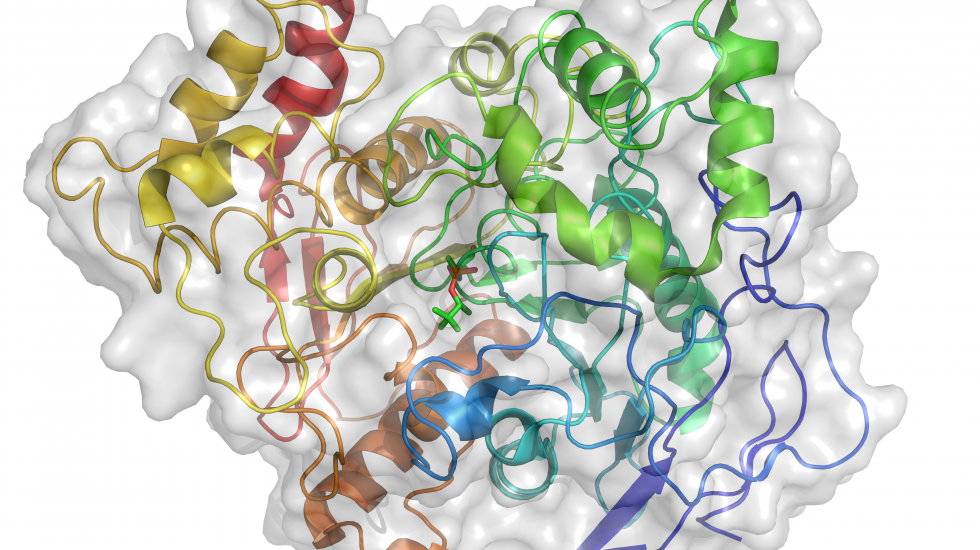
Depiction of the soman conjugate of acetylcholinesterase. Nerve agents like soman inhibit the normal actions of acetylcholinesterase, an enzyme crucial to nervous systems (Protein Data Bank Structure 2WFZ)
Toxins
Toxins are toxic chemicals produced by living organisms. These are considered as both chemical and biological weapons when used in violation of the Convention.
Toxins are toxic chemicals produced by living organisms. These are considered as both chemical and biological weapons when used in violation of the Convention.
The development, production and stockpiling of toxins for purposes of warfare are prohibited under both the CWC and Biological Weapons Convention (BWC). Like the CWC, the BWC also requires States parties that possess toxin weapons to destroy them.
Toxins are covered by the CWC because they are chemicals that can have chemical weapons applications, and fall under the definitions listed above for chemical weapons and toxic chemicals.
Synthetic Toxins
It is possible to synthesis many types of toxins in laboratories without harvesting the organisms that produce them in nature. Moreover, a number of toxins are also synthetic dual-use chemicals, meaning that under the CWC they can be produced in the quantities required for legitimate activities.
There are two toxins explicitly listed in Schedule 1, these are ricin (produced in nature in the seeds of the castor bean plant) and saxitoxin (produced in nature by cyanobacteria).
Old and Abandoned Chemical Weapons
Old chemical weapons fall into two categories: chemical weapons produced before 1925 and chemical weapons produced between 1925 and 1946 ‘that have deteriorated to such an extent that they can no longer be used as chemical weapons’.
Old chemical weapons of the first category may be ‘destroyed or disposed of’ as toxic waste in accordance with the relevant State Party’s national laws after the OPCW Secretariat has confirmed that they were indeed produced before 1925.
Those weapons that fall into the second category of old chemical weapons are to be destroyed in accordance with the same conditions as other chemical weapons, though the time limits and the order of destruction can be changed, subject to approval by the Executive Council.
Guidelines for determining whether weapons in this category have deteriorated enough to be unusable, however, have yet to be decided, though efforts to do so are ongoing. Categorisation of such weapons therefore remains problematic.
Abandoned Chemical Weapons are chemical weapons, including old chemical weapons, abandoned by a State after 1 January 1925 on the territory of another State without the consent of the latter.
Types of Chemical Agents

Choking agents
Inflicting injury mainly on the respiratory tract, choking agents irritate the nose, throat, and especially the lungs. When inhaled, these agents cause alveoli, air sacs in the lungs, to secrete fluid, essentially drowning those affected
Example agents
- Chlorine (Cl)
- Chloropicrin (PS)
- Diphosgene (DP)
- Phosgene (CG)
Dispersal
Gas
Mode of Action
Absorption through lungs
Effects
Fluid builds up in lungs, choking victim

Blister agents
One of the most common chemical weapon agents, these oily substances act via inhalation and contact, affecting the eyes, respiratory tract, and skin, first as an irritant and then as a cell poison. Exposure to blister agents cause large and often life-threatening skin blisters which resemble severe burns, and often results in blindness and permanent damage to the respiratory system.
Although casualties are high, deaths represent a small percentage.
Example Agents
- sulfur mustard (H, HD)
- nitrogen mustard (HN)
- lewisite (L) and phosgene oxime (CX)
Dispersal
Liquid, aerosol, vapour, and dust
Mode of Action
Absorption through lungs, skin
Effects
Burns skin, mucous membranes and eyes; blisters skin, windpipe, and lungs

Blood agents
These agents mainly inhibit the ability of cells to use oxygen, effectively causing the body to suffocate. Some blood agents may also affect the ability of blood cells to transfer oxygen. Blood agents are distributed via the blood and generally enter the body through inhalation.
Example agents
- Hydrogen cyanide (AC)
- Cyanogen chloride (CK)
- Arsine (SA)
Dispersal
Gas
Mode of Action
Absorption through lungs and skin; inhibits the Cytochrome C Oxidase enzyme
Effects
Cells’ ability to use oxygen is impaired, leading to damage to vital organs including those of the central nervous system, cardiovascular system and respiratory system

Nerve agents
Nerve agents block an enzyme called Acetylcholinesterase (AChE) in the nervous system. This causes the accumulation of a neurotransmitter between nerve cells or across synapses leading to hyper-stimulation of muscles, glands and other nerves. Nerve agents are highly toxic with rapid effects. They act primarily by absorption through the skin and lungs. Nerve agents are divided into two main groups: G-series agents and V-series agents, named for their military designations. Some G-agents, particularly tabun and sarin, persist in the environment for only short periods. Other agents, such as soman and cyclosarin, persist longer and present a greater threat to the skin. V-agents are extremely potent, with only milligrams needed to cause death, and persist for long periods of time in the environment.
Example agents
- Tabun (GA)
- Sarin (GB)
- Soman (GD)
- Cyclosarin (GF)
- VX
Dispersal
Liquid, aerosol, vapour and dust
Mode of Action
Absorption through lungs (G-series); contact with skin (VX); inhibits the AChe enzyme
Effects
Overstimulation of parasympathetic system effecting the peripheral and central nervous system, including: lacrimation, salivation, sweating, blurred vision, headache, difficulty in breathing and vomiting. In higher doses, nerve agents cause seizures, loss of body control, muscle paralysis (including heart and diaphragm) and unconsciousness.

Riot control agents
Riot control agents are intended to temporarily incapacitate a person by causing irritation to the eyes, mouth, throat, lungs, and skin.
Riot control agents, such as tear gas, are considered chemical weapons if used as a method of warfare. States can legitimately possess riot control agents and use them for domestic law enforcement purposes, but states that are members of the Chemical Weapons Convention must declare what type of riot agents they possess.
Example agents
- Tear Gas (CS)
- Pepper Spray (OC)
Dispersal
Liquid, aerosol
Mode of Action
Absorption through lungs, skin and eyes
Effects
Tears, coughing, and irritation to eyes, nose, mouth and skin; constricts airway